01
Human-first AI
Where human judgment, creativity, empathy and accountability remain essential—and where AI can amplify them.
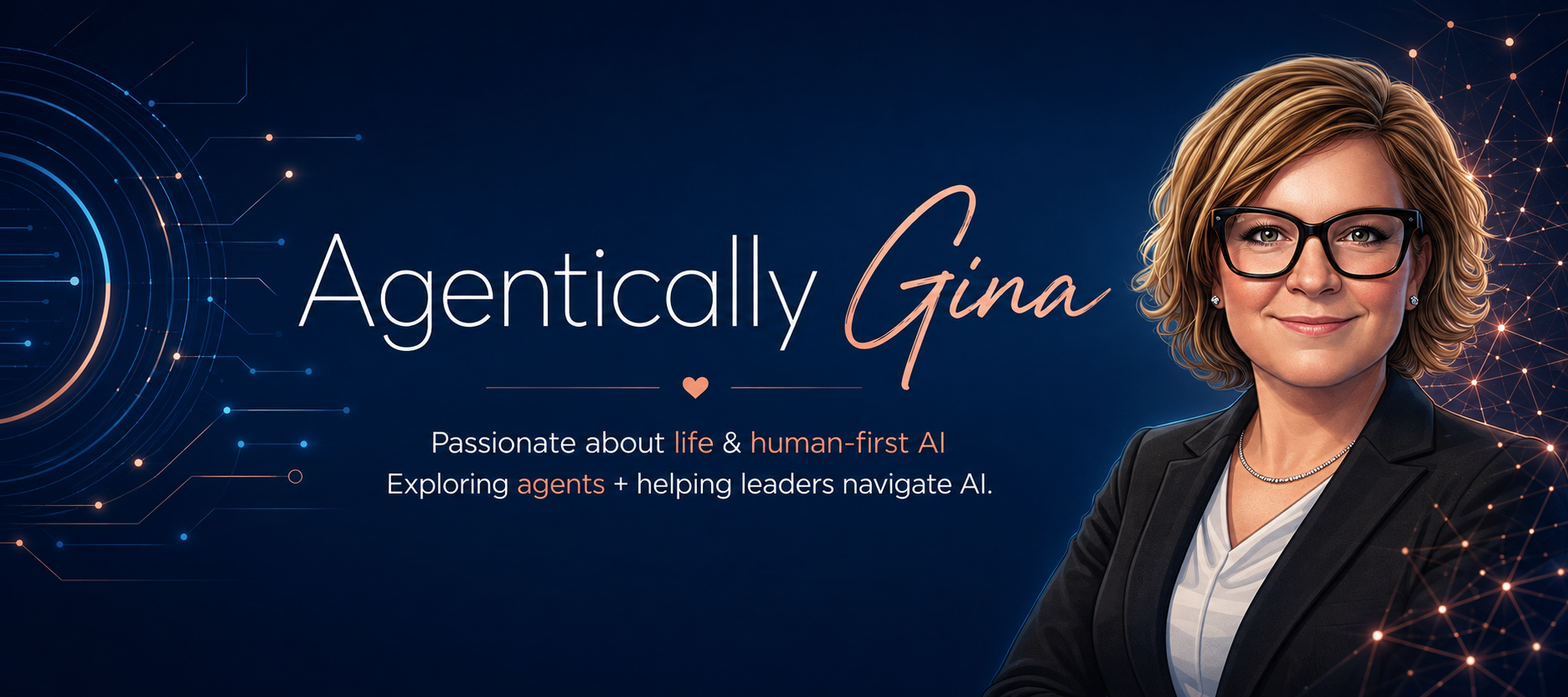
Exploring how people, leaders and organizations can use increasingly capable AI without giving up judgment, accountability, creativity or humanity.
Practical, executive-level thinking without treating AI as either magic or menace.
Where human judgment, creativity, empathy and accountability remain essential—and where AI can amplify them.
How agents change workflows, roles, orchestration and the design of knowledge work.
Why access is not capability, and what it takes to move from tools to durable behavior and business value.
What executives need to understand as AI compresses learning cycles, changes decisions and redistributes work.
Practical thinking about controls, accountability, human oversight, risk and responsible scaling.
Learning by building: prompts, agents, workflows, prototypes and the small experiments that reveal what is actually useful.
Writing and frameworks will live here as the work grows.
This space is deliberately practical: interested in what the technology can do, and more serious about whether people can trust it, govern it, and use it to make work meaningfully better.
Playbooks, executive briefs and practical tools will live here as the body of work develops.
A practical way to connect technology, governance, workforce capability and business outcomes.
A structured set of questions for leaders deciding where agents are ready to enter real workflows.
A field guide for moving from tool access to capability, workflow redesign and measurable adoption.